Agribusiness is both an economic transformation and an employment opportunity for youth in Kenya and the entire East Africa. However, food safety and quality standards are critical challenges that are embedded in this opportunity. There have been rising concerns about food contamination. Food safety incidents in Kenya have increasingly been documented with evidence showing the issue has been aggravated by poor post-harvest handling and storage, aflatoxin contamination, limited quality control in informal market systems, poor enforcement of food safety regulations and misuse of agrochemicals and pesticide residues.
Food safety is not only a compliance issue, but a leadership and enterprise survival issue. Evidence from Kenya Bureau of Standards (KEBS) and World Health Organisation indicates unsafe food results in loss of customer trust, illnesses and restricted market access. Globally, 600 million cases and 420,000 deaths of foodborne illness are reported annually, with a disproportionate number occurring in Africa. This has translated into lost income and damaged reputations to some agribusiness enterprises. The failure to meet quality standards for businesses has limited access to premium and export markets. KEBS has consistently flagged food contamination, which has led to rejection of Kenya’s food produce in export markets.
Why food safety and quality standards matter for agribusiness enterprises
Food safety is a determinant of market access. Food safety standards compliance is required in both local and export markets. The Food and Agriculture organisation has posited that countries with low compliance to quality standards lose income and export opportunities. In Kenya, Kenya Plant Health Inspectorate Service is a certification body that enforces quality standards and determines whether products are sold in formal markets or not. Failure to comply with food quality standards results in agribusiness entrepreneurs being locked out of premium markets.
Food quality dictates the price and profit of a product. Poor quality food standards drastically downgrade food and may lead to complete rejection. This results in agribusiness entrepreneurs being trapped in informal, low-income markets and possible losses as poor quality also undermines value addition efforts.
There is increasing consumer awareness in food safety. Ignorance of food safety quality may lead to agribusiness enterprises being irrelevant. Consumer purchasing decisions are now being shaped by hygiene, chemical residues and product traceability.
The Ministry of Health in Kenya has consistently emphasised on food safety quality as a public health issue. This is because unsafe food has been a major cause of disease outbreaks, increased health costs and long-term health complications. Therefore, it is important to note that agribusiness entrepreneurs are critical custodians of public health.
What does leadership in quality standards look like?
In order for agribusiness entrepreneurs to be successful, leadership in ensuring quality and food safety is required. This is what leadership in ensuring quality food standards looks like:
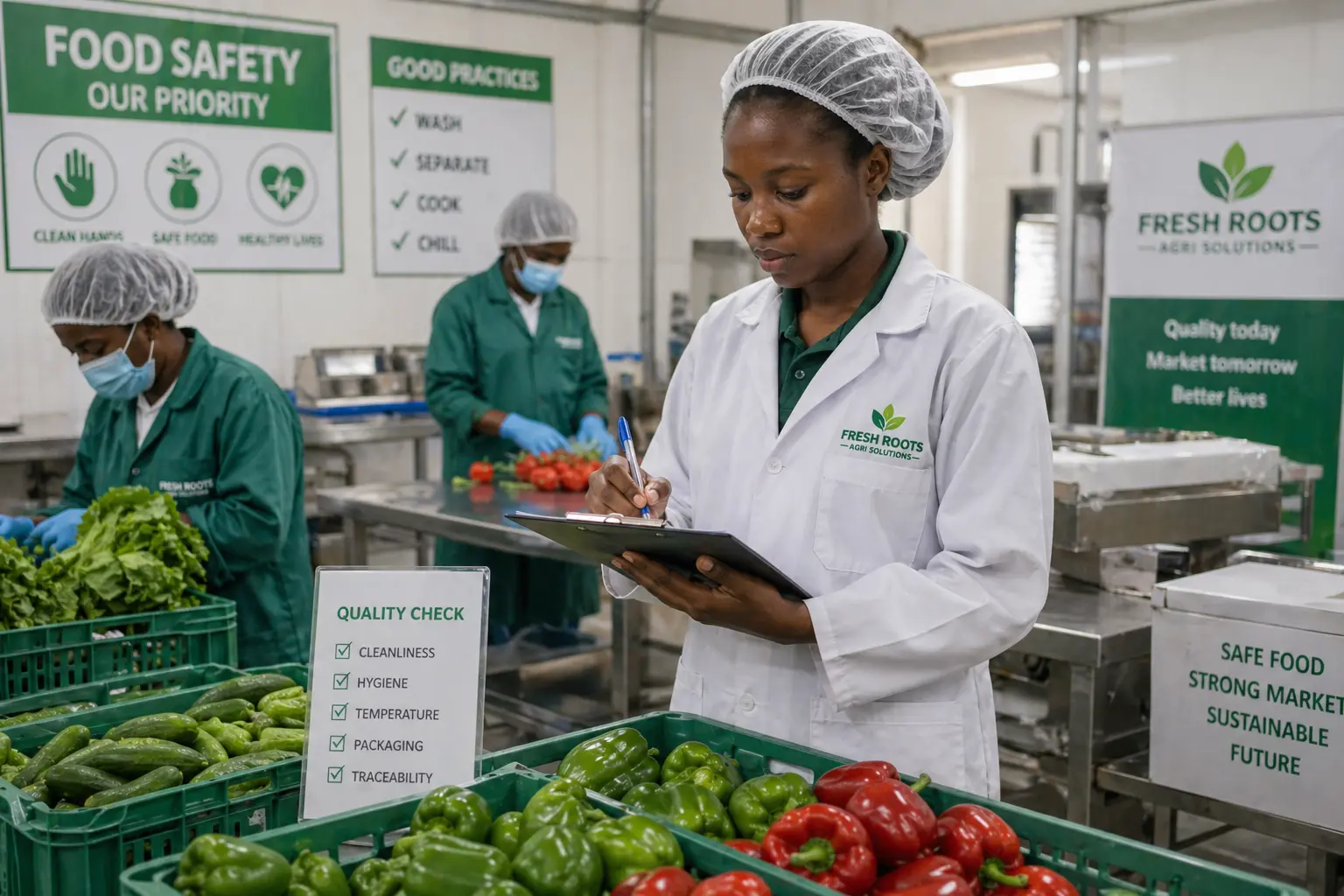
Investment in proper food handling, processing and storage systems
Making disciplined decisions on food quality standards, even when shortcuts seem cheap
Compliance with regulatory standards
Establishment of an ethical culture in agribusiness enterprises
Upholding long-term brand reputation with sustainability.
Upholding of these standards does not only set enterprises to compliance but also competitive advantage to accessing premium markets and customer loyalty.
KLFs position: Embedding Quality in Leadership Development
Kameru Leadership Foundation’s (KLF’s) positions food safety and quality not only as a compliance issue but a critical leadership responsibility in enterprises. Our programmes integrate quality standards, market compliance and certification awareness and ethical decision making in business. KLF recognises that ethical practice for competitive enterprises requires leaders who advance quality, integrity and accountability.
Our focus is to develop ethical youth agribusiness leaders who prioritise safe, credible and market-ready products. This is because, food quality is not only an advantage but also a foundation of agribusiness enterprise sustainability and increased public trust.